Showing posts with label Fledgling Garden Series. Show all posts

Tuesday, 3 June 2014

My Fledgling Garden

Over the past couple of months I have wanted to build a bug house in the garden. I have the perfect site for it, at the bottom of the garden in a rather neglected area between the bamboo and the californian lilac. There are two houses being built over the road from me, and today I finally plucked up the courage to ask if I could take a pallet and some plastic pipe off-cuts, as raw material for the project (and it would be free). I took Olly with me for moral support. They were happy for us to take what we wanted, which was very kind.

And so Olly and I came home begin work on a house for bugs.


I sawed the wooden pallet in half (my arm is still aching) and stacked one on top of the other. We then set about filling the plastic pipe off-cuts, cracked plastic flower pots and bricks with an assortment of dried leaves, straw, bark, bamboo canes cut into lengths, wood and broken pieces of terracotta pot. Everything came from the garden in one way or another. We even had a topping out ceremony, as Olly adorned the top of the bug house with a spinning windmill!

It took us a couple of hours to make, and apart from the sawing of the pallet, Olly was able to assist with the whole construction and assembly. We were both really pleased with the end result. We are going to make a sign. We thought 'Bug Hall' was a good name. And if you know me at all by now, you will have gathered that I am rather taken by the fact that our building is blue. I had my choice of pallets, but there really was no contest when I saw this beauty. Stylish and aesthetically pleasing, I think you will agree. Let's hope that the bugs do too.

Leanne xx


Tuesday, 27 May 2014

My Fledgling Garden


Gardening can be a hit and miss affair. You can't control the weather You can't control what will and will not grow. I can't anyway. My garden is still looking rather green. Many of the plants that should be flowering now aren't. Mainly all the different aliums that bloomed so profusely last year. They didn't return and I have no idea why. There is one lonely Purple Sensation alium. Last year there were ten. There are gaps in the borders where they and others should be. It's all very sad.

There is also an overcrowding issue that I need to sort out this week.I intend to move the Lavatera, as it's gone mad and in danger of swamping all my cottagey plants. I think the garden is maxed out. I have no more space to put anything else. I am waiting for the floral explosion, and I am getting impatient.

There have been some successes. The tulips were amazing and the anemones are still going strong. My roses that I bought in the sale are romping away and have flower buds. I cannot wait to push my nose into my first rose. The sweet peas are thriving. Yay! And so are all of the sunflowers. I've usually lost half to the slugs and snails by now. All my seeds became seedlings and became little plants. I've given away loads, and that makes me feel happy. My Dahlias that I over wintered have all sprung back into life. I have twice as many as I did last year, and they are dotted all over the garden.


What about you? What's your biggest success so far? What hasn't gone so well? And why am I so scared of my allotment?

Leanne xx


Thursday, 15 May 2014

My Fledgling Garden

Pops and I are off to the allotment this morning to plant out runner beans and mange tout. I will update you with an occasional post on plot number 10, if you like. Suffice to say that there isn't much going on up there at the moment. Just lots of plastic covering much of the plot, in order to help kill off the couch grass and get the worms to do their thing. We have dug over a small area, and will go for it later in the year.


The two photographs above illustrate my garden nicely right now.

There is a constant flurry of activity on my part. And lots of stuff about to break out and party. Seeds that I have sown are potted on or put out into the garden. I sit on the decking, and am endlessly transplanting seedlings into bigger pots. Forty five Cosmos plants, for example. Many have now been planted in the garden. It's going to be very busy out there this summer. I have given some to Olly's nursery. My garden just isn't big enough.

The Tulips have all but finished, but the Anemones are still going. They are popping up in the planters to say hello. There are doubles and variegated colours to add to the usual red, white and mauve this year. The Clematis and Honeysuckle are in bloom. A cascade of colour draped over the fences. My dream of covering that once bare expanse is very nearly complete. Just a few bare patches, but they should have disappeared by next year.

I have succumbed and bought a couple of packs of bedding plants. Mainly Snapdragons. I saw a tall white variety on sale in my local diy store. They were on offer. Resistance was futile. I adore them. They remind me of childhood. Sadly the Hollyhocks haven't returned. I had hoped for self seeding loveliness, like the beauties in the garden up the road from me. I may have to buy a couple of packs from the garden centre. I still have my birthday voucher from my Mum.

The Delphiniums are still little seedlings in the greenhouse. I'm worried that they took too long to germinate, so won't be ready for the garden. But then I remind myself that it is only May, and they may just be a little later this year. As the garden warms up, it will accommodate them I'm sure. It's all part of my vision for a cottage garden. My favourite kind. Haphazard, blousy, full of the sounds of pollinators.

This morning I have hung some bunting. And I am thinking of some solar fairy lights to string through the shrubs and along the fence. The bunting looks a bit twee. I love it! The lights will be pretty twinkling in the warmer evenings to come, I think.

Off to open up the greenhouse. It is starting to smell of tomato plants in there. Heady and aromatic. Promising red fruit to go with the salad leaves. I can't wait.

Leanne xx


Thursday, 24 April 2014

My Fledgling Garden


So I wanted to write a post about salad, because at this time of year my mind always turns to thoughts of eating a lighter kind of meal. The kind that I can throw together in minutes. When the weather is fine, I want to be out in it as much as I can. The colder, darker months are for standing and stirring by the stove. The lighter, warmer months are for impromtu barbecues, picnics or just a quick sandwich hastily packed before going to the beach.

It is very easy to grow your own salad just outside your own backdoor. You don't need a greenhouse. You just need some large pots and compost, possibly a grow bag and a sunny sheltered place. It doesn't have to be sunny all day either. As long as your crop has some sun it will do fine. Armed with these few necessities, you can grow salad leaves.


As well as being ridiculously easy to grow. They can take up very little space and can give you something to put in your sandwich, or have with your omelette, or as an accompaniment to your evening meal. I used to grow lettuce, but I always ended up with about twenty ripe lettuce to get through, and then none after that. But then I discovered the joy of the salad leaf. Those cut and come again varieties that I was buying by the bagful in the supermarket. I don't know why the light bulb didn't switch on earlier. But I live and learn in the garden.

The trick is to get a crop all summer long. To achieve this you need some packets of seeds. There is an infinite variety to choose from at the garden centre, and I like to buy several so that I have a good mixture of colour and taste. Next you will need three pots in which to grow your salad. The idea is that you want your salad to grow in stages, so that you always have a plentiful supply. So I plant up my first pot, and then my second about four weeks later and my third four weeks after that. It doesn't take long for the salad to grow, and you can cut as little or as much as you require. As the first pot is dwindling in supply, the second should be well on the way to being ready. You can repeat the process all through summer and well into Autumn.

What I love about this is that it is gardening at it's most productive. The crop couldn't be any fresher. It hasn't been sprayed with any nasty chemicals and it's travelled feet instead of miles to get to your plate. You can cut a few leaves for a sandwich, or a great handful for a salad. Last summer Olly really enjoyed picking the salad with me. He could be quite heavy handed, but the leaves are quite robust and could take some over enthusiastic plucking. Sometimes if the salad got too hot, it would start to bolt (set seed), but all I did was remove and start again. There was a new crop well on the way by that time.


These pictures are my first crop, ready to be picked. I admit that these were grown under glass, but I have my second and third crop outside, and they are coming on well. I have also given over my little veggie plot at the side of the house to salad crops this year. Now I have the allotment, I can grow all my veg up there. But there is something so nice about going outside your own back door and collecting some edibles from your garden. Besides, it's rather a long way to go for just a few salad leaves.

..............................

 A sunny windowsill is perfect for growing cress and other sprouting seeds, which can add a further dimension to your salad bowl. I have some sprouting in the conservatory. They grow very quickly, so are a good thing to grow with kids. And there are lots of tomato and cucumber varieties that can be grown outside. There are those bred specifically for patio planting. So even if you don't have a lot of space, you can grow them in a couple of pots. If you have a greenhouse or a really sunny and sheltered site, you can grow peppers too. And lets not forget edible flowers, which look pretty and taste good. I grew Nasturtiums last year after my neighbour gave me some of her seeds. They tasted fabulous in my salad, and looked very pretty too, which pleased me no end!

Leanne xx


Wednesday, 2 April 2014

My Fledgling Garden


Spring has taken it's time in my garden this year. Slowly and steadily the bulbs that I planted last Autumn are starting to flower. Mainly tulips and anenomes so far. The perennial plants are unfurling their leaves, promising me untold loveliness in the coming months. There are throusands of tightly packed buds on the clemetis montana, and the various honeysuckles and other climbers are sending shoots towards fences and walls.

Overall the effect is patchy to say the least. I have sowed thousands of annual seeds, casting them out from my hand into the soil. It was a rash move, and nothing may come of it. But I am hopeful that some of them will take root and flower later in the year. I would love to see poppies, cornflowers and marigolds popping up all over the place. Probably wishful thinking, but I am rather slap dash like that. Never a meticulous planner of stuff.


I have been asked by a few people to look at their gardens/holiday owners flower pots and I've also volunteered my services at Olly's nursery garden. I'm very excited at this turn of events. Do you think my slap dash approach will be okay here? I'm not getting paid or anything, so I kind of feel that as they are getting my boundless enthusiasm and free seedlings from the greenhouse, any slap dash should be forgiven!

Next week, it's all about salads.

Leanne xx

Thursday, 27 March 2014

My Fledgling Garden


This post is something of a confessional. Here's the thing. I have never had much success with Sweet Peas. There I've said it. It feels good to get that off my chest.


I have grown them from seed for the past five years. They are one of the first seeds I ever planted in my greenhouse. I am able to get them to germinate. To grow into healthy seedlings, and from there into a plant that can be put into the garden and trained up a wigwam. I have picked flowers from them, and inhaled their scent deeply. I have put posies by my bedside, and admired their beautiful form and colour. But they have never grown as prolifically as I would have liked.

I am determined that this year I (or possibly the lucky person that inherits them when they buy the house) will be picking a  multitude of blooms to perfume the house. Ideally I would like several sweet pea wigwams dotted about the garden borders and some more scrambling up the fence by the veggie patch. I would be a very happy fledgling gardener if I could manage that.

So I have consulted all my gardening books and on line sources to come up with a guide of sorts to successful sweet pea adventuring. I'm sure all of you reading this manage just fine with your sweet peas. Hence why this post is really for my own benefit!


  •  Sweet Peas are hardy annual plants. They have an amazing scent, and that's primarily why I want to grow them. They will happily reside in a posy jar by your bedside and pump out their perfume for you to enjoy. They also look fabulous in the garden scrambling up wigwams and tepees or over arches and trellis. They give height and interest in the border.
  • The best scented sweet peas are from 'old fashioned' stock, and not the new cultivars. The most commonly known are 'Matucana' and 'Cupani's Original.' Sarah Raven also recommends 'Painted Lady' and 'Black Knight' varieties. I have sowed all of these this year.
  • Early sowing is key. Late winter is ideal, although Sarah Raven gets hers started in September. I sowed mine in late January in the greenhouse, so they still have a way to go. Sowing in the Autumn results in larger plants, and an earlier picking season.
  • Sow a couple of seeds to a pot. Sweet peas dislike root disturbance, so long thin pots are ideal. I use the tubes from toilet rolls, which biodegrade in the soil. I soak the seeds overnight to help soften the hard casing of the seed, but I have read that it isn't necessary. Multi purpose compost is fine. Push the seed about 2cm into the soil. I've read that it's a good idea to cover the seed trays to keep keep moisture and heat in and light out. I never have, and my seeds germinate well enough.
  • Once the seeds have started to germinate, make sure that they are kept cool. A cold greenhouse or cold frame or windowsill in a shed is ideal. The cool conditions promote root growth.
  • When there are three or four pairs of leaves, pinch out the growing tip. This promotes vigorous side shoot formation. I have not done this before, and so very nervously attempted it last weekend. I googled a tutorial and followed that.
  • For the next month or so, keep the plant moist, check for any spindly tips and pinch out if necessary. Check the bottom of the pot for white roots, and if any are visible pot up. Two plants to one two litre pot is ideal.
  • Once the roots have filled this pot, they are ready to plant out into the garden. If you have sowed in the Autumn, then your sweet peas should be ready to plant out now. Mine are not ready yet, but this weekend I shall be potting up into larger plants and will hopefully be planting out by mid April.
  • Sweet peas will need some kind of support to scramble up. I am hoping to have three wigwams in my garden and some climbing a trellis fence. They need to be tied in regularly, as it makes for stronger plants. And once they start to flower you need to pick. If you see any seed pods forming pinch them off, as once the the seed forms the plant will stop producing flowers.
  • When the flowers are coming to an end, you can let the pods form in order to pick seed for the next year's sowing.


The pictures were taken at Eden Project last summer. There was a display of sweet peas on a long wall of trellis. It was sumptuous and heavenly to walk around burying ones nose deep inside the flowers. I'd love the space to recreate something like that.

And there you have it. A not so definitve guide to successful sweet peas. Of course you could always bypass all of the above nonsense, and buy some plug plants from the garden centre. But where would be the fun it that? :)

Leanne xx


Sunday, 9 March 2014

My Fledgling Garden

Hello to you all.

What beautiful weather we have had here in West Cornwall. Outdoors weather, without the need for coats and scarves. Bliss.


It's been a busy week in my garden. Lots of to do stuff, which makes me happy and contented.This weekend I have been painting sheds and potting up and on. Now that the house is up for sell, I feel under pressure to get the garden looking spick and span. I'm hoping that this spell of good weather we've been promised will encourage a garden growth spurt. I'm trying not to give in to temptation and buy some ready made annuals from the garden centre. My garden's north facing aspect means my garden takes longer to warm up. The flowers that are in bloom are low to the ground and not easy to see from any kind of distance. I am regretting not buying those sacks of Daffodils last year. At least there would have been swathes of yellow and orange in the flower beds.


I have potted on the Lupins and Sweet Peas, and potted up Cosmos, Cornflowers, Astrantia, Delphiniums, Calendula and more. I am in danger of running out of space soon, and I've not started on the vegetables yet. Some of the flowers will be donated to two friends of mine. They have asked for some help in their garden. I'm chuffed to bits, and will be trotting round to them laden with annuals in the near future. I have assured them that I'm just an enthusiastic beginner, but it's still nice to be asked.

I have fallen in love with my greenhouse again. I have bought some new staging. Cheap and cheerful, but it does the job. I have tidied it up and now have everything within easy reach. I have spent time pottering with seed packets and compost. Sowing sparingly and watering gently. I didn't realise just how much I have missed being here. I find it therapeutic.

I've decided to go ahead with veg planting. It could be months before we sell, and I can always take stuff with me. I don't want to deny myself the enjoyment I get from gardening. And I want cucumbers, tomatoes, peppers, beans, peas, salad leaves, shallots, strawberries and blooms galore in the garden.


Last but not least. I've painted the sheds. This is Marc's office. I will festoon it with bunting later this Spring. I think it will look pretty. I like the colour. Very Mediterranean. The shed in Beryl and Jean's area have been painted the same colour. I shall be painting the raised beds, flower pots and more in the week to come.

Spring has definitely sprung.

Leanne xx


Monday, 24 February 2014

My Fledgling Garden

Last year I started composting. My father in law had a compost bin languishing behind his shed, and I asked if I could have it. It was one of those green plastic ones that our local council gave away a few years ago. I brought it home and then wondered just what I was going to do with it.

Compost is a natural organic material that contains important nutrients and nitrogen beneficial for the health and growth of your garden plants and vegetables. It improves the condition of the soil, and helps to retain moisture for your plants to take in and absorb. If you are gardening in earnest, making your own compost is a natural step. Much of our kitchen waste can be composted, which will provide nutrients for all the plants in your garden. These in turn will provide leaves, twigs and garden waste that can be put into the compost bin. And so the cycle continues.


And why send good composting material to land fill when it can be used to improve our own back gardens? When kitchen and garden waste goes into landfill sites, it ends up getting buried and producing methane as it rots. This damages our environment. Composting is done above ground by all the lovely worms, microbes and bacteria and no methane is produced.

When I took possession of my compost bin, I didn't know the first thing about compost. I always bought mine from the garden centre, put it into my raised beds or pots and planted my plants. I didn't give any particular thought to the compost itself. Now I wondered how to actually go about filling the bin. And with what?

Making compost is a bit like making a cake. You need the right amount of ingredients in order to make good compost, so try and aim for a 50/50 mix of 'green' and 'browns'.
Greens are important because they rot quickly and provide a moist nutrient rich material. They  include:
grass cuttings, soft plant cuttings, dead flowers, bedding plants and leaves, tea bags and leaves, vegetable and fruit peelings tops and leaves, used coffee grounds and filters, young weeds, poultry and horse or cow manure.
Browns are important because although they are slow to rot down, they provide carbon and the fibrous material which holds pockets of air. Browns include:
cardboard egg boxes, egg shells, shredded paper, cardboard tubes, cereal boxes, twigs, straw and hay, wool, vacuum cleaner contents, bonfire and barbecue ashes, bedding from pets such as rabbits and guinea pigs.
There are also items that shouldn't be put into a compost bin. They include:
cooked food, diary products, dog faeces, diseased plants.
All the above will smell as they rot down and attract rats and mice.

Looking at the above lists, there really isn't much that can't be put into the compost bin. The key is to maintain a balance of green and brown material.  For example, if your compost looks a bit dry, then add more green material. It's also worth adding your material in thin layers. If you dump a load of grass cuttings from your mower into the compost bin (as I have done), it will just become slimy. Try and mix it up with some brown material, so that it can rot down more effectively.


I was naive enough to think that I would be spreading my home grown compost around almost immediately. I should have known that the process takes time. Good compost can take up to a year to be produced. It cannot be rushed. Site your bin on bare earth, so that the worms can get up inside it. It's also a good idea to put it where it gets some sun. Most bins are hidden away in the shade, but it needs a little heat from the sun to get the process started. I have sited mine down the side of the house, next to the chicken run.

Once you have a good heap of material inside the bin, it will heat up. When it has cooled it will be time to turn it. The reason for turning it is so that it can be aerated and no slimy mass has congregated anywhere. This is not so easy in my bog standard bin. You could tip it all out, turn it and pile it all back in again. I didn't have the space for that, so I tried as best as I could with my fork. I also had a go with gloved hands, but only the one time...

I got a great deal of satisfaction in taking all my kitchen waste down to the compost bin every day. I lifted the lid and threw it all in.When we harvested the broad beans, Olly carried all the spent pods and threw them into the bin. Ditto any other garden waste. We could never resist having a peek inside. The flies that may be on the top are harmless fruit flies, but if you don't like that you could always cover the top of your compost with a bit of old carpet to stop them hanging around. I was always amazed at how it had all rotted down if we had been away for a few days camping. It didn't smell unpleasant either. Olly loved being part of the process, and although he probably isn't old enough to fully understand the mechanics of composting, he is growing up with a nod to the mindful way we try and get rid of our waste.

This weekend I proudly deposited my home made compost all over my raised vegetable beds. It was moist, crumbly stuff that smelt pleasantly of the earth. There was still a few egg shells here and there and some twiggy bits that hadn't completely rotted down. I put those back into the compost bin, ready to start the process all over again. I cannot tell you how proud I was of my first batch of home made compost.

Leanne xx


Monday, 17 February 2014

My Fledgling Garden

There's not much I can do in the garden at the moment. The bulbs are pushing through, and there are even flowers. Early crocus, muscari and amenome blanda. Very pretty, but close to the ground and difficult to see from the conservatory. I prefer a bigger bloom if I'm honest, but these are really for the pollinators that will emerge soon. At least I hope the bad weather hasn't put them back. There are leaves unfurling everywhere, and buds forming on the deciduous plants.


This weekend Marc and I turned our attention to the front of the house. My greenhouse lives here, as it has a southern aspect. The front contains Lilac, Buddliea, Privet, Palm, Agapanthus and Fuschia. We laid gravel down several years ago for reasons of low maintenence. Lately it has all started to look a bit overgrown and messy out there. I never really minded too much - I quite like the unkempt bed head look. But I had to agree with Marc that if we want to sell the house (more of that later), then we need a bit of kerb appeal. Or at the very least a tidy front garden.


So the Fuschia and Buddliea were pruned back hard. The Buddliea will grow to the same height again this summer. The Fuschia will grow more steadily, but will still flower this year. The Agapanthus was cut back so that the front path could be navigated again. I didn't realise how much it had taken over. The weeds were weeded, and a new load of gravel was laboriously carried in trugs, deposited and raked smooth.


It was a lovely sunny afternoon and we went at it with gusto. Olly helped too. He worked very hard, and enjoyed using the garden implements and carrying gravel in his bucket - even with his wellies on the wrong feet. It felt good to be involved in a joint enterprise with Marc. And after about three hours we had a tidied front garden, a pleasant ache in the limbs and a well earned cup of tea on the doorstep.


All that remains is to prettify the porch (I'm thinking a couple of Bay trees) and decide whether to continue with my seed planting, or to save them for somewhere new. My fledgling garden may soon be handed over to another, and I am unsure how I feel about that. Proud of what I have acheived, and sad to leave it behind.

Leanne xx


Friday, 7 February 2014

My Fledgling Garden


It's been wet. Really wet. Wet and windy. But mild. The plants are pushing up through the soil, unfurling their leaves and there are flowers too. Only a few, but exciting nonetheless. The Anemones have self seeded in the grass, which I'm thrilled about. The staging in the greenhouse is about to collapse. It was given to me by a neighbour, but I think I may have to invest in some new ones. I have more seed to sow, and February through to March is the time to get it started under glass. The sweet peas are going well, as are the Snap Dragons. They are teeny tiny now. Hopefully they will be strong plants for the garden in a couple of months. I hope to grow a sweet pea screen this summer, and I have chosen heritage varieties which will pump out scent and provide me with loads of bedside posies.

Strawberry & Nasturtium

Rose

Sedum
My seeds have arrived from Sarah Raven and Chiltern Seeds and I'm eager to get sowing them too. I need to buy compost for the raised vegetable beds. All this wet weather has washed away a lot of soil. I'm going to try the no dig method, and let the worms do the work for me. I'm thrilled that the Blueberry bushes have sprung back to life. They were scorched by last year's heatwave, and I didn't get any fruit. Fingers crossed for this year.

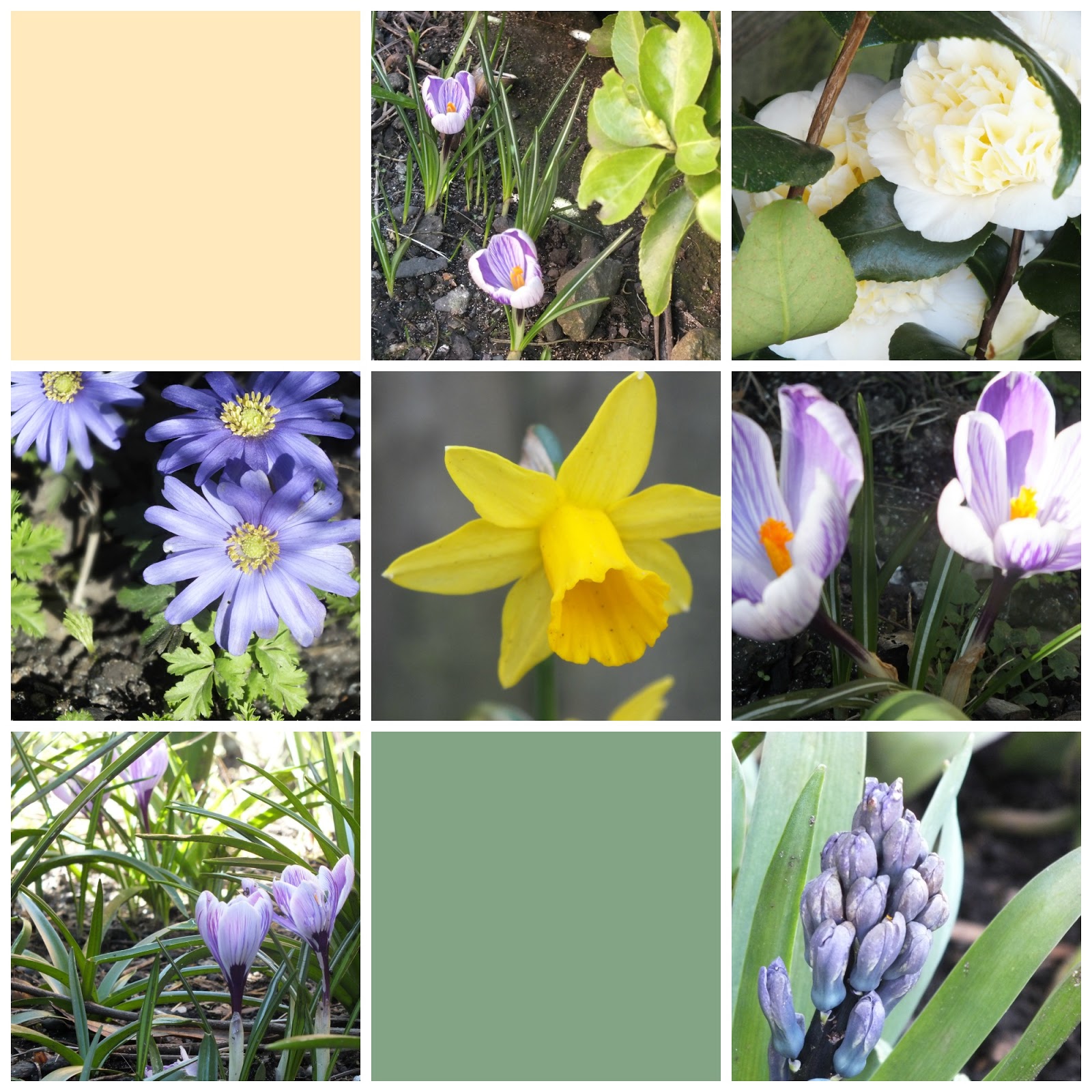
Camellia

Tulip, Daffodil, Hyacinth, Anemone, Iris

Pixie Lupin
If I get a chance I will be pruning the Buddleia and Red Robin this week. It's the right time of year for it, and it keeps them tidy and healthy. I say prune, but hack is probably a better choice of word. There are many complicated tutorials on pruning, but what I do seems to work so.....

Snap Dragon
 
Blueberry

Sweet Pea

Crocus
It's all coming along nicely.

Leanne xx